Solving “Parked Too Long”: HQESS Mobile Charging Vehicle Deployed at Used-EV Storage Yard
A 215 kWh unit with an 80 kW DC gun keeps stored EVs in their healthy state of charge — and rescues the ones that go flat.
Vehicles parked too long
The yard stores more than one hundred EVs. After more than two weeks, some vehicles fell below 20% state of charge and triggered BMS undervoltage protection.
Why conventional fixes fell short
- Fixed chargers required site modification and additional electrical capacity
- Towing to an external charger cost roughly $30–$70 per trip
- Prolonged low state of charge accelerated battery degradation
Charging without fixed infrastructure
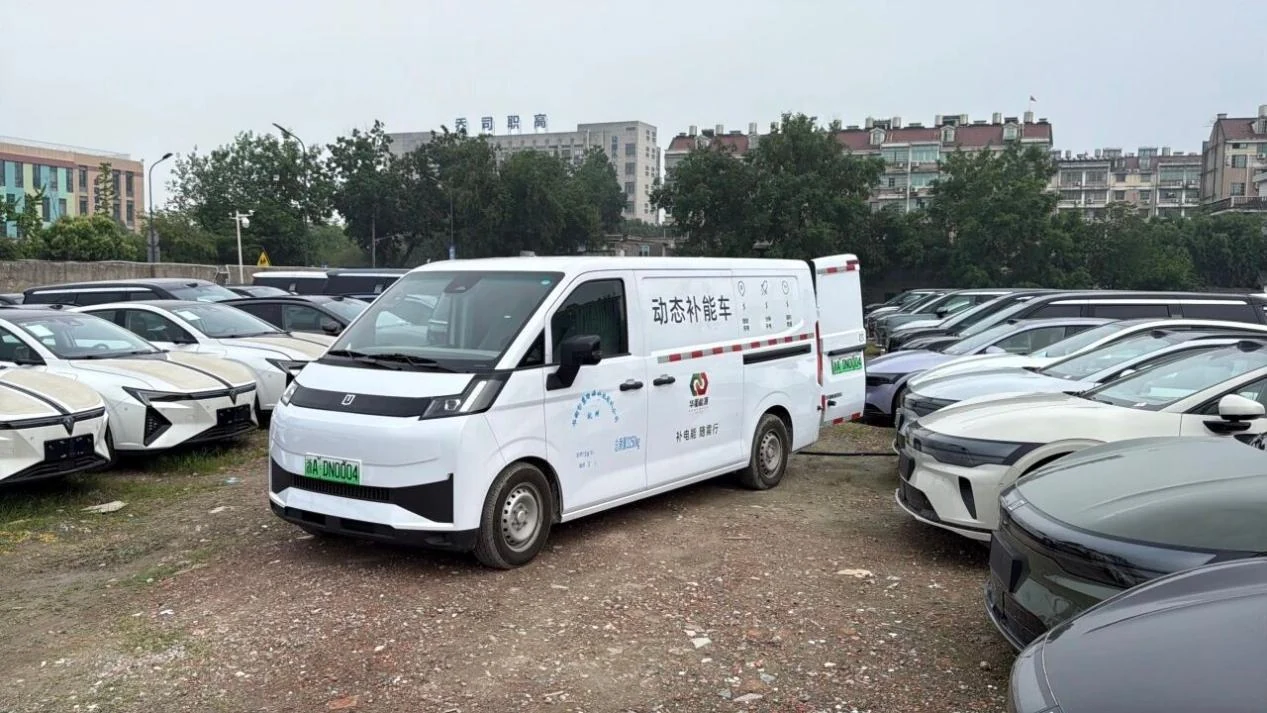
HQESS deployed a 215 kWh mobile charging vehicle with an 80 kW DC output. It drives directly to depleted vehicles and typically restores them to a usable range in 15–30 minutes.
A healthier storage strategy
Inventory vehicles are maintained at 50–70% SOC, avoiding both very low charge and the calendar ageing associated with prolonged full-charge storage.
Long-term on-site service
Under a charging-service agreement, the unit moves between parking bays to recover depleted vehicles and provide periodic shallow charging for the wider inventory.
Controlled by energy management
The in-house energy management system monitors voltage and current, controlling charge rate to balance recovery speed with cell safety.
车辆停放过久
场站长期存放一百多辆电动车。部分车辆停放超过两周后电量降至 20% 以下,并触发 BMS 欠压保护。
常规处理方式的局限
- 固定充电桩需要场地改造和额外电力容量
- 拖车前往外部充电点每次约需 30 至 70 美元
- 长期低电量存放会加速电池衰减
无需固定设施的补能
HQESS 部署一台 215 kWh 移动充电车,配置 80 kW 直流输出。设备可直接驶向亏电车辆,通常在 15 至 30 分钟内将车辆恢复至可用电量。
更健康的库存电量策略
库存车辆维持在 50% 至 70% SOC,既避免过低电量,也减少长期满电存放带来的日历老化。
长期现场服务
根据充电服务协议,移动设备在各停车位之间调度,为亏电车辆恢复电量,并为库存车辆定期进行浅充维护。
能源管理控制
自主能源管理系统持续监测电压与电流并控制充电速率,在恢复效率与电芯安全之间取得平衡。